 Deutsch
 English
Mobican and BÜRKLE: Efficiency and flexibility in a new dimension
Since its founding in 1988, Mobican (Jean-sur-Richelieu, Quebec) has been synonymous with high-quality, functional home furniture that combines design, quality, and everyday practicality. Influenced by its European roots and a clear, Scandinavian-inspired understanding of design, Mobican creates furniture with timeless aesthetics, clean lines, and a calm design language. The product range includes bedroom, dining room, and living room furniture as well as modular audio and video solutions that impress with carefully selected woods, high-quality fittings, and durable construction.
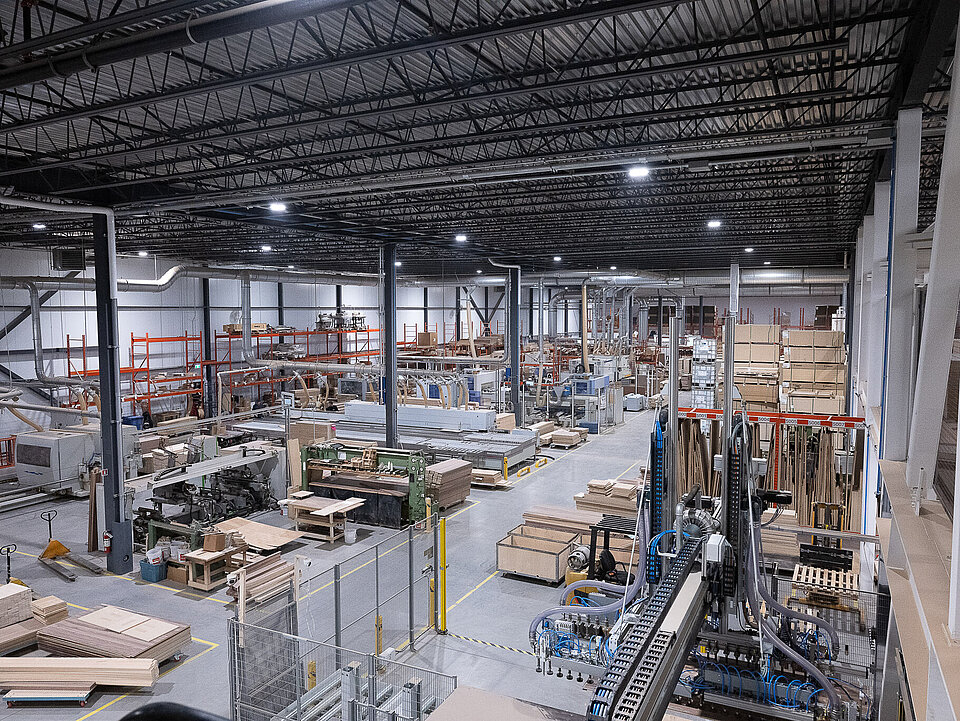
One of the furniture manufacturer's key strengths is its exceptionally high level of vertical integration. The entire design and production process, from veneer production to final assembly of the furniture, takes place at its own factory in Canada. Mobican is therefore not dependent on prefabricated panels, but can flexibly determine decors, material thicknesses, and surfaces itself and manufacture them precisely to design and market requirements. This independence enables a high degree of variety while maintaining a consistent level of quality and underlines the company's claim to combine precision craftsmanship with industrial efficiency.
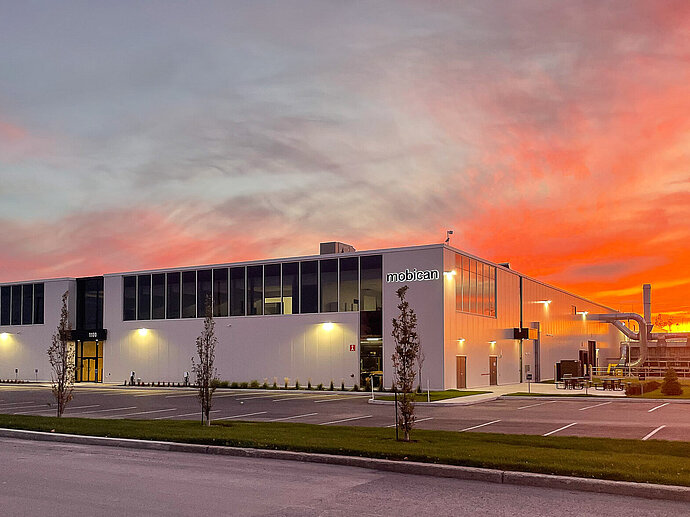
All Mobican furniture is designed and manufactured in Canada. The company primarily works with high-quality wood species such as walnut, oak, maple, cherry, and teak, while focusing on craftsmanship, customization options, and sustainable production practices. Its modern manufacturing facility in Québec is LEED Silver certified, reflecting the company's commitment to environmentally responsible operations.
With Mobican's continuous growth, the technical requirements for production have also increased in recent years. Larger furniture parts, rising quantities, and new material concepts meant that existing manufacturing processes were increasingly reaching their limits. In the area of panel pressing in particular the existing technology became a limiting factor, especially in view of the large number of formats and changing material thicknesses. The construction of a new production hall therefore offered the opportunity to fundamentally rethink the veneer coating process and realign it technologically in order to permanently ensure the company's own quality standards, even under growing market requirements.
Willingness to embrace complexity
Due in part to its large product portfolio, Mobican was not looking for a standard solution. The requirements went well beyond the usual, as very different material thicknesses (from a few millimeters), narrow parts from 200 mm in width, and large-format panels up to 5 × 10 feet had to be processed. At the same time, the system had to independently recognize which recipes were required in the process and automatically adjust the pressing parameters without operator intervention. Many suppliers reacted cautiously because the combination of format width, automation, and process reliability was demanding and quickly pushed "classic" press concepts to their limits.
BÜRKLE took a clear counterpoint here: even in the initial discussion, the team signaled that it was not afraid of this challenge, but wanted to actively solve it. For Mobican, this was exactly the deciding factor. "Many suppliers rejected our ideas for modernizing our production. Bürkle was different in this respect and accepted the challenging ideas. That convinced us right from the start," says Patrick Selmay, CEO of Mobican.
Selmay also emphasizes the early collaboration with Axel Mayer's project team, who interpreted their role not merely as a supplier contact, but as a technically minded partner who clearly structured requirements and derived concrete solutions from them. This trust was central to Mobican, as the project not only involved individual machines, but also introduced a new process logic for panel production.
A new dimension in panel production
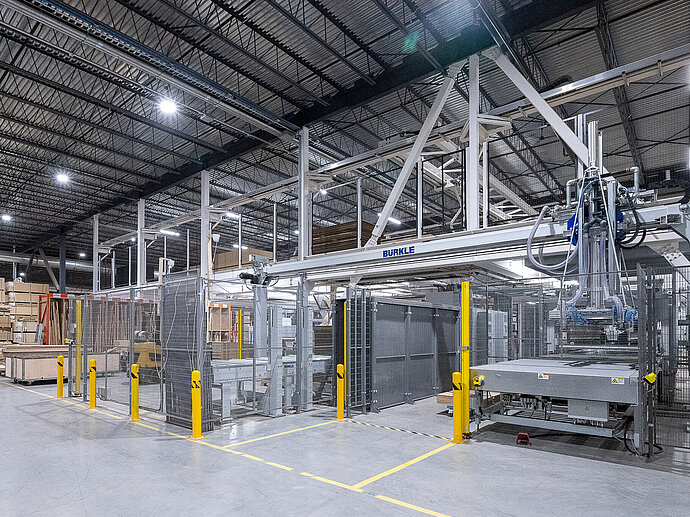
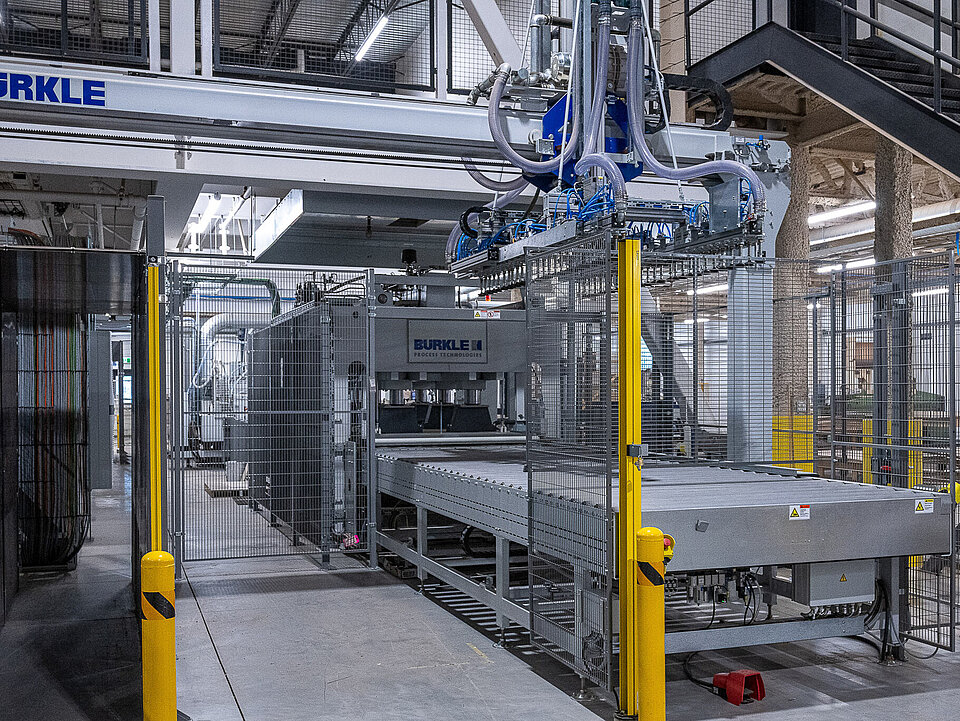
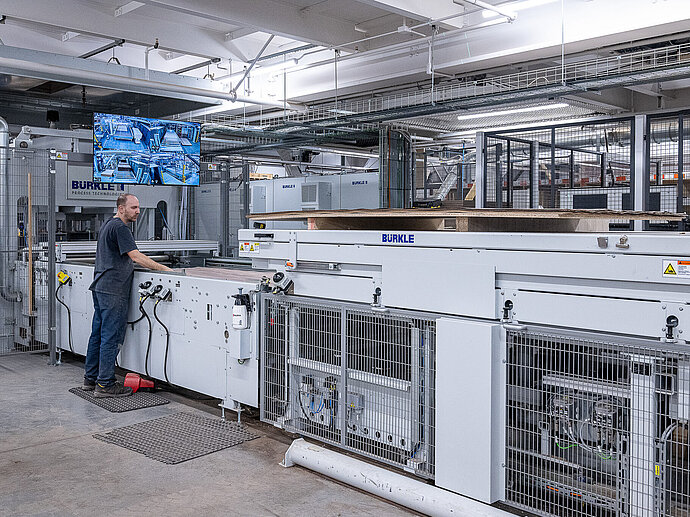
The through-feed press line derived from these requirements is therefore not designed with individual technical features, but rather as an interplay of press technology, sensor technology, handling, and automated process control. The system recognizes each incoming panel, measures its thickness and position, and automatically adjusts the system to the respective format. This enables extreme format and thickness changes for both small individual parts and large-format furniture panels without any changeover times.
At its core is a robust through-feed press with precise temperature control and even pressure distribution. This produces high-quality veneering results regardless of material thickness and format. This is an important point, as Mobican works with varying surface requirements and still has to deliver consistent quality. The through-feed press is complemented by fully automatic handling, which stabilizes the material flow and reduces the number of employees required. The wood-based panels, which weigh up to 120 kg, are now produced by one machine operator instead of four. "With the new system, we have reduced our personnel requirements by a good 75% and at the same time increased capacity threefold. Looking back, these figures prove that our ideas and Bürkle's concepts were the right approach. For us, Bürkle is the ideal example of old-school German engineering: when they promise something, they deliver," says Nicolas Selmay, Vice President of Mobican, summarizing the joint project.
Conclusion: An upgrade that redefines production
With the new line, Mobican has turned a bottleneck into a strategic advantage: higher capacity, significantly less personnel commitment, efficient handling, and a process logic that masters variant diversity not as a disruptive factor, but as standard. For Mobican, the project is therefore more than just a new plant; it is a technological foundation for future growth.